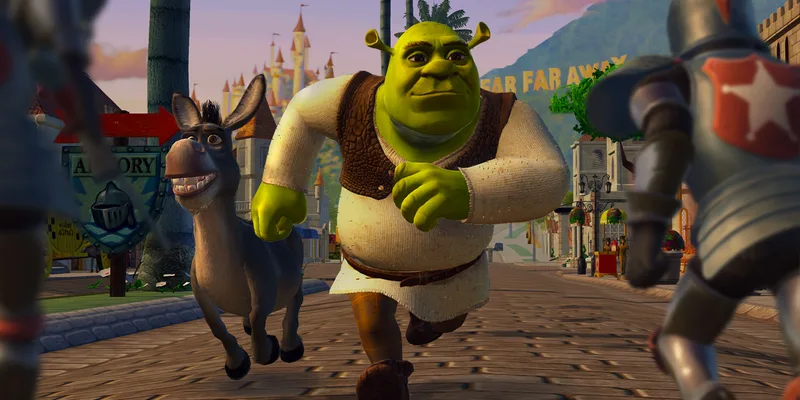
- DreamWorks Shrek 2 Remastered how long to beat has no verified official runtime yet.
- Story length should be judged only after the final campaign structure is confirmed.
- Completion time may vary with collectibles, puzzles, mini-games, and co-op progress.
- Best estimate method is to separate story completion from full completion.
- Reliable updates should come from official announcements, launch details, or player-tracked data.
DreamWorks Shrek 2 Remastered how long to beat
DreamWorks Shrek 2 Remastered how long to beat cannot be confirmed with a reliable number at this time. The available information does not provide an official campaign timer, chapter count, completion estimate, or verified player reports. That makes any precise hour total speculative rather than useful.
The safest approach is to treat the runtime as unconfirmed until the remaster has a public release build or an official feature breakdown. A trailer, store listing, or announcement can establish that a project exists, but those materials do not automatically reveal how long the full experience takes.
For a game built around a story campaign, playable characters, puzzles, collectibles, and cooperative action, several completion styles may produce very different results:
| Completion Style | What It Measures | Current Status |
|---|---|---|
| Story completion | Finishing the main campaign | Not officially timed |
| Casual playthrough | Story progress with exploration and retries | Not officially timed |
| Full completion | Collectibles, optional objectives, and mini-games | Not officially timed |
| Co-op run | Campaign progress with another player | Not officially timed |
| Replay session | Repeating stages or challenge content | Depends on final features |
A useful runtime guide should not confuse campaign length with the amount of time players can spend in the game. A compact story may still offer replay value through alternate characters, cooperative play, collectible hunting, challenge stages, or repeated mini-games.
Do not treat a rumored hour count as confirmed. Until the release version is available, precise estimates should be labeled speculative or omitted.
What Determines the Campaign Length
The final playtime will depend on how closely the remaster follows the original structure and whether it adds new content. A faithful visual update may preserve the existing level flow, while an expanded edition could introduce additional challenges, accessibility options, bonus stages, or quality-of-life features.
The most important runtime factors are listed below:
Main Story
The number of stages, cutscenes, boss encounters, and required objectives will define the baseline campaign time.
Exploration
Hidden collectibles, alternate paths, and environmental puzzles can extend a first playthrough beyond the critical path.
Co-op Play
Playing with another person may change the pace, especially when coordinating combat, movement, or puzzle solutions.
Replay Content
Mini-games, character abilities, score goals, and missed collectibles can encourage additional sessions.
A player who focuses only on reaching the ending will naturally finish faster than someone who searches every area. Repeated attempts at difficult encounters can also increase playtime without adding new story content.
| Runtime Factor | Effect on Playtime | Why It Matters |
|---|---|---|
| Stage count | High | More required levels usually create a longer critical path |
| Puzzle difficulty | Medium to high | Failed attempts and experimentation add time |
| Collectibles | Medium | Completion-focused players revisit areas |
| Co-op coordination | Variable | Teamwork can speed up or slow down progress |
| Mini-games | Variable | Optional activities can add substantial replay time |
The remaster’s design philosophy will also matter. If the developers preserve the original pacing, the campaign may feel like a focused licensed adventure. If they add modern progression systems or bonus content, the total time could become more varied across players.
Track both a story-only run and a completionist run. This gives readers a more useful range than one unsupported number.
How to Track Your Own Playtime
Once the game is publicly playable, players can create a dependable runtime reference with a simple tracking method. The goal is to separate active gameplay from menu time, repeated restarts, and optional activities.
Start a Fresh Save
Begin with a new save file and record the start time. Do not include time spent browsing menus, adjusting settings, or waiting before the first playable section.
Choose a Clear Playstyle
Decide whether the run is story-focused, exploratory, or completionist. Keep the same goal throughout the session so the result remains comparable.
Record Major Checkpoints
Note the start and finish of each chapter, major stage, boss encounter, or story segment. These checkpoints reveal where the campaign spends most of its time.
Separate Optional Content
Track collectibles, mini-games, bonus objectives, and failed attempts separately. This prevents optional activities from obscuring the main campaign result.
A basic log can produce better information than a single informal statement. For example, one player may report a short story run while another includes every collectible and several co-op retries. Both results can be valid when the categories are clearly explained.
| Tracking Category | Record This | Exclude or Separate |
|---|---|---|
| Story run | Required stages and story scenes | Collectible detours |
| Exploration run | Optional paths and hidden items | Long idle periods |
| Completionist run | Every known objective | Unrelated menu time |
| Co-op run | Shared campaign progress | Connection downtime |
| Replay session | Repeated stages and mini-games | First-playthrough story time |
For the most useful community data, report the playstyle, difficulty setting, number of players, and whether the run included retries. A runtime without those details is difficult to compare.
Share the total time, completion goal, player count, and major optional activities. Clear categories make runtime reports much easier to trust.
Story Run Versus Full Completion
A “how long to beat” article should present more than one category because players approach licensed adventure games differently. The critical path is usually the most useful starting point, but it does not represent the experience of someone collecting every item or replaying every activity.
Use the following framework when official or community timing becomes available:
| Completion Goal | Recommended Description | Suitable For |
|---|---|---|
| Story-only | Finish required missions with limited detours | Players focused on the narrative |
| Standard run | Explore naturally and attempt some optional objectives | Most first-time players |
| Completionist | Collect all items and clear optional goals | Completion-focused players |
| Co-op campaign | Complete the story with a second player | Friends and local co-op groups |
| Replay-focused | Repeat mini-games, challenges, or favorite stages | Long-term fans |
The difference between a story run and full completion may be especially noticeable if the game includes character-specific actions. A stage can be finished once, then revisited after players understand how to use another character’s ability or locate a previously missed secret.
Co-op can also change the result in either direction. Coordinated players may solve puzzles faster, while casual groups may spend longer experimenting or replaying funny moments. That is why co-op should be listed as its own category rather than folded into a single campaign average.
Runtime Research Checklist:
- Confirm the game version and release build
- Record whether the run is story-focused or completionist
- Note the number of players and difficulty setting
- Separate optional content from required campaign progress
- Compare multiple player reports before publishing an average
Until verified data exists, the most accurate wording is that the runtime is not yet confirmed. This is more useful than presenting a false precision that could be repeated across search results.
A single completion time can mislead readers. Separate story, standard, completionist, and co-op results whenever reliable data becomes available.
When a Reliable Runtime Guide Can Be Updated
A dependable runtime guide can be updated in stages. Initial information may confirm the campaign structure, while later player data can establish practical completion ranges. Each update should identify what has changed and avoid replacing uncertainty with unsupported certainty.
The strongest evidence usually arrives in this order:
| Evidence Type | Reliability | What It Can Confirm |
|---|---|---|
| Official feature details | High for announced content | Campaign structure and supported modes |
| Public release build | High for actual pacing | Stage flow, loading behavior, and available content |
| Multiple player logs | Medium to high | Practical completion ranges across playstyles |
| One informal estimate | Low | A personal result, not a general benchmark |
| Rumor or unsupported listing | Very low | Cannot establish playtime |
When updating this page, editors should preserve the distinction between confirmed details and estimates. If a developer announces a set number of stages, that is a factual update. It still does not prove how many hours an average player will need.
A good future runtime entry should include:
- The game version used for testing.
- The number of players.
- The selected difficulty, if applicable.
- Whether collectibles were pursued.
- Whether mini-games and bonus content were included.
- Whether idle time, menus, and repeated attempts were counted.
This standard keeps the guide useful for both search readers and long-term fans. It also prevents early speculation from becoming a permanent part of the wiki.
Update the runtime only when the evidence supports a clear category. Keep confirmed facts and player estimates visibly separate.
Q: How long is DreamWorks Shrek 2 Remastered?
There is no verified official playtime available yet. The campaign length should remain unconfirmed until a public release build or reliable player testing provides evidence.
Q: Can one trailer confirm the game's total runtime?
No. A trailer can show characters, environments, or features, but it normally does not reveal the complete campaign structure or average completion time.
Q: Should story mode and full completion use different estimates?
Yes. A story-focused run, a standard exploratory run, and a completionist run measure different goals and should be reported separately.
Q: What is the best way to report a personal completion time?
Include the game version, player count, difficulty, completion goal, optional content, and whether retries or idle time were counted.