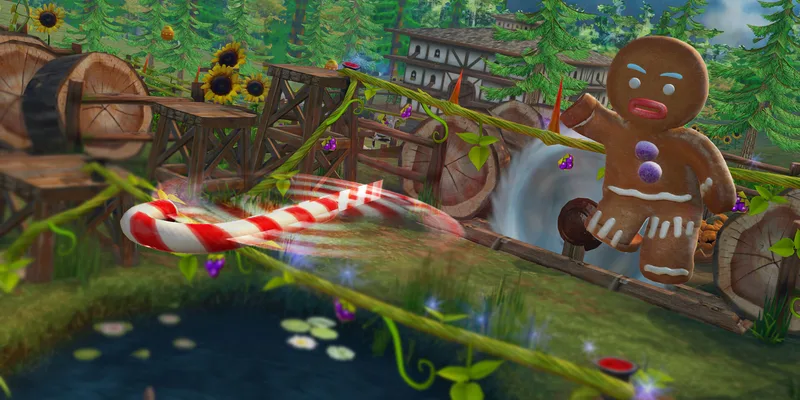
- DreamWorks Shrek 2 Remastered should preserve its character-based co-op combat and storybook presentation.
- Core gameplay works best when players swap between heroes to solve combat and movement challenges.
- Best improvement target is responsiveness, especially movement recovery, partner behavior, and camera control.
- Replay value would benefit from expanded challenge modes, local co-op options, and clearer collectible rewards.
DreamWorks Shrek 2 Remastered Gameplay Review
DreamWorks Shrek 2 Remastered has the foundation of a strong family-focused action adventure: a recognizable animated world, a rotating cast of playable characters, simple controls, and levels built around teamwork. The original design is easy to understand, but its strongest ideas deserve a more polished presentation and smoother pacing in a modern remaster.
The key appeal is not complexity. Each hero has a compact move set built around jumping, attacking, and using a signature ability. That simplicity makes the adventure approachable for younger players while still creating useful tactical differences between characters. A remastered edition should keep that clarity rather than adding systems that distract from the cooperative format.
The campaign structure also benefits from taking detours away from the film’s exact plot. Instead of simply repeating every movie scene, the game can expand the fairy-tale setting with additional errands, hazards, enemy encounters, and character-focused challenges. That approach gives the game its own identity while preserving the familiar story beats fans expect.
| Review Area | Original Design Strength | Remaster Priority |
|---|---|---|
| Combat | Simple attacks and character abilities | Improve hit feedback and responsiveness |
| Exploration | Compact areas with optional objectives | Add clearer routes and discovery rewards |
| Co-op | Character swapping and shared progression | Improve camera behavior and partner navigation |
| Story | Movie-inspired plot with extra detours | Refine pacing and expand missing story moments |
| Replay Value | Missions, collectibles, and bonus content | Add meaningful challenge modes |
The best remaster would modernize the feel of the adventure without turning it into a faster, more complicated game. Its charm comes from accessibility, teamwork, and playful variety.
Family-Friendly Combat
Straightforward controls make the game approachable, while unique abilities give each character a clear role.
Playable Variety
Swapping heroes changes how players handle enemies, obstacles, jumps, and special encounters.
Fairy-Tale Detours
Original side adventures add personality instead of copying the film scene for scene.
Characters, Combat, and Co-Op Roles
The character system is the heart of the experience. Shrek, Fiona, Donkey, and other allies should not feel like cosmetic selections; each one needs a practical reason to enter the action. A good remaster can make these differences easier to read through improved animations, clearer ability icons, and stronger visual effects.
Shrek is best suited to heavy interactions. His strength can support crate movement, powerful attacks, and encounters that reward direct engagement. Fiona works well as a more technical option, particularly when timing, mobility, or temporary control effects matter. Donkey brings a forceful close-range style that can disrupt enemy groups. Ranged or utility-focused characters can create distance and handle targets that are awkward for melee heroes.
The cooperative format works when players understand when to switch roles. It becomes less effective when partner characters get stuck, fail to follow the route, or contribute too little during combat. Improved companion pathfinding should be one of the first technical upgrades in any remaster plan.
| Character Role | Best Use | Suggested Remaster Improvement |
|---|---|---|
| Heavy Fighter | Break obstacles and stagger enemies | Stronger impact effects and quicker recovery |
| Control Specialist | Manage timing-based encounters | Clearer duration indicators |
| Close-Range Striker | Launch or interrupt enemies | Better targeting and crowd feedback |
| Ranged Utility | Attack from safer positions | More reliable aiming and projectile feedback |
| Support Partner | Assist during multi-character sections | Smarter navigation and objective awareness |
Read the Encounter
Check the enemy layout, obstacle placement, and available space before committing to an attack. Large groups are easier to manage when players identify the safest route first.
Choose the Right Hero
Use the character whose ability matches the challenge. Heavy interactions favor strength, timing puzzles favor control, and distant targets favor ranged utility.
Create Space
Avoid keeping every character in the same position. Spread the team across the arena so one hero can interrupt enemies while another handles the objective.
Swap Before Recovery
Change characters when a hero is trapped in a long recovery animation or surrounded by enemies. Proactive switching keeps the team moving.
Finish the Objective
Defeating enemies is not always the main goal. Protect allies, collect items, activate mechanisms, and reach the exit before clearing every threat.
A remaster should not assume that more enemies automatically create better multiplayer. Enemy density must support readable teamwork, reliable camera framing, and enough space for every character to act.
Level Design, Missions, and Pacing
The strongest levels combine a recognizable location with a small set of changing activities. Players might fight through a crowded area, protect a civilian, gather ingredients, solve a movement problem, or complete a character-specific challenge. This variety prevents the campaign from becoming a repetitive sequence of basic battles.
Optional objectives are also important because they give experienced players a reason to revisit completed stages. Collectibles, rescued characters, hidden items, and mission goals can create a satisfying completion path, but the rewards need to be explained clearly. A remaster should show what each objective unlocks and whether it contributes to a broader collection.
Pacing is the main concern. Action-adventure levels need enough movement speed to make traversal feel purposeful. Long delays after attacks, slow transitions, and awkward recovery animations can make otherwise creative stages feel heavier than intended. Faster input response would improve the experience without changing its family-friendly identity.
| Mission Type | Gameplay Purpose | Better Remaster Presentation |
|---|---|---|
| Story Objective | Moves the campaign forward | Add clear goal markers |
| Rescue Task | Encourages protection and route planning | Show ally status and danger zones |
| Collection Mission | Rewards exploration | Display progress by area |
| Character Challenge | Highlights a hero’s identity | Add replay ratings or score targets |
| Combat Defense | Tests crowd control | Improve enemy wave readability |
A well-balanced stage should include a visible main route, optional side spaces, a character-based interaction, and a clear conclusion. The design does not need to become open world. Compact levels with strong visual landmarks are more suitable for a cooperative fairy-tale adventure.
Aim for one major story objective, one optional exploration goal, one character-specific interaction, and one memorable set piece per stage. This keeps variety high without overwhelming younger players.
Main Route
A readable path that keeps the campaign moving and minimizes confusion.
Optional Route
A side area with collectibles, rescued characters, or bonus objectives.
Hero Moment
A section where one playable character’s ability becomes especially valuable.
Set Piece
A memorable chase, defense, boss, or environmental sequence that gives the level identity.
Progression, Collectibles, and Replay Value
Progression should reward exploration without making upgrades mandatory for basic completion. Permanent improvements can make repeat playthroughs more satisfying, especially when they enhance health, attack strength, resource gains, or ability utility. However, the game should communicate their value early so players understand why collecting currency matters.
The most effective collectible structure uses several layers. One layer supports immediate upgrades, another tracks mission completion, and a third unlocks visual or bonus content. This gives players short-term and long-term goals without requiring every item to be equally important.
A remaster could also strengthen replay value with optional challenge settings. Time trials, score attacks, survival encounters, and cooperative mini-games would give completed levels a second purpose. These modes should be clearly separated from the main story so younger players can enjoy the campaign without pressure.
| Progression Feature | Player Benefit | Recommended Treatment |
|---|---|---|
| Currency | Buys upgrades or useful bonuses | Explain its purpose during the first stage |
| Mission Goals | Encourages thorough exploration | Track mandatory and optional goals separately |
| Collectible Gallery | Adds completion motivation | Use clear area-by-area progress |
| Bonus Challenges | Extends post-campaign play | Include score, time, and survival variants |
| Character Upgrades | Makes repeat runs feel different | Keep effects readable and balanced |
Remaster Quality Checklist:
- Confirm every character has a useful gameplay role
- Improve partner navigation and cooperative camera behavior
- Make mission goals and collectible rewards easy to track
- Reduce slow recovery animations and unnecessary traversal delays
- Add replayable challenge modes beyond the main story
The campaign should remain the main attraction, while bonus challenges provide optional depth. Replay systems work best when they reward mastery instead of forcing repeated grinding.
Remaster Priorities and Final Verdict
A successful remaster should focus on feel before scale. Higher-resolution visuals are welcome, but smoother controls, improved camera behavior, stable co-op performance, and more reliable partner AI would have a greater effect on everyday play. These changes would preserve the original structure while removing friction that can interrupt the adventure.
The presentation can also be refreshed without losing its storybook character. Sharper lighting, improved environmental detail, expressive character animations, and cleaner menus would help the world feel more cohesive. Music and sound effects should remain playful and theatrical, with improved mixing for combat and cooperative actions.
The final verdict is cautiously positive. The concept has enough personality to justify renewed attention, especially because it combines familiar characters with a game structure built around group play. It should not be redesigned as a large modern action game. Its best version is a polished, responsive, and replayable family adventure.
| Priority | Why It Matters | Verdict |
|---|---|---|
| Controls | Determines whether combat and movement feel satisfying | Essential |
| Partner AI | Keeps co-op progression smooth | Essential |
| Camera | Protects visibility during group encounters | Essential |
| Visual Upgrade | Refreshes locations and character presentation | Valuable |
| New Content | Adds replay value after the campaign | Recommended |
| Major Redesign | Could weaken the original identity | Avoid |
The ideal DreamWorks Shrek 2 Remastered experience is familiar but cleaner: preserve the humor, character swapping, and cooperative structure while improving responsiveness, clarity, and replay options.
Q: What should DreamWorks Shrek 2 Remastered improve first?
The highest priorities are responsive controls, smoother movement recovery, better cooperative camera behavior, and more dependable partner navigation.
Q: Should the remaster add a larger open world?
Not necessarily. Compact levels with clear landmarks, optional routes, and varied objectives fit the original family-focused action-adventure structure better.
Q: How can the game improve replay value?
Expanded challenge modes, cooperative mini-games, collectible tracking, time trials, and score-based objectives would give completed stages more purpose.
Q: What makes the character system important?
Each hero can provide a different combat or exploration solution. Clear role identity makes swapping meaningful and supports cooperative play.