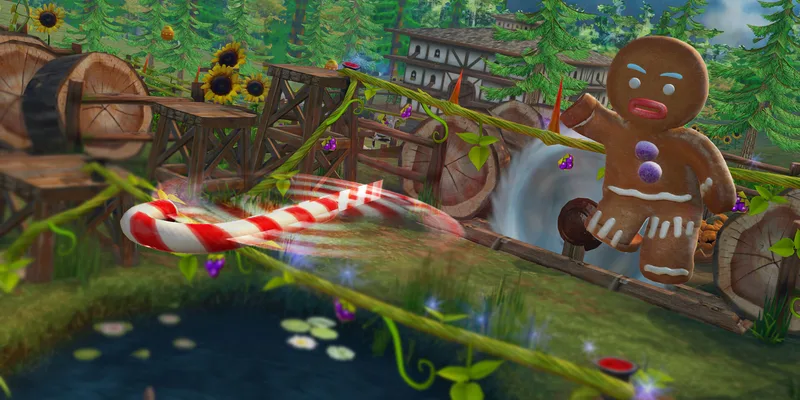
- DreamWorks Shrek 2 Remastered review: A practical look at what makes this remake worth watching.
- Core appeal: Its strongest foundation is cooperative action built around the Shrek 2 movie world.
- Remaster priority: Better presentation matters, but responsive controls and stable multiplayer matter more.
- Best audience: Fans of licensed games, couch co-op, and nostalgic early-2000s adventures.
- Review verdict: Promising for groups, with final value depending on polish and technical consistency.
DreamWorks Shrek 2 Remastered review: What It Needs to Preserve
DreamWorks Shrek 2 Remastered review coverage starts with one important question: can the remaster preserve the personality of the original while making the experience comfortable for modern players? The 2004 game earned lasting attention because it was more than a basic movie tie-in. It combined action stages, platforming, character abilities, light puzzles, and cooperative play into a colorful adventure based on the film’s cast and locations.
A successful remaster should protect that identity rather than replace it with a generic action game. The humor, recognizable characters, varied environments, and simple pick-up-and-play structure are central to the appeal. Modern improvements should make the adventure clearer and smoother without removing the playful design that gives the game its character.
| Review area | What matters most | Expected impact |
|---|---|---|
| Original identity | Humor, characters, movie-inspired locations | Keeps the remaster recognizable |
| Controls | Responsive movement and reliable attacks | Reduces age-related frustration |
| Presentation | Cleaner textures, readable menus, sharper scenes | Improves modern usability |
| Multiplayer | Stable local and online sessions | Expands the audience beyond nostalgia |
| Accessibility | Clear settings and comfortable display options | Makes longer sessions easier |
Nostalgia Value
Familiar characters, locations, and comedy give returning players an immediate connection to the adventure.
Co-op Appeal
Shared progression and complementary character abilities make the game especially suitable for groups.
Modern Comfort
Improved menus, visuals, loading behavior, and control options can make the older structure easier to enjoy.
The strongest remaster strategy is refinement, not reinvention. The game should feel like a cleaner, more accessible version of its original self.
Gameplay Review: Combat, Platforming, and Variety
The original Shrek 2 game is best understood as a cooperative action-platformer rather than a deep role-playing game. Players move through themed stages, defeat enemies, collect items, solve straightforward obstacles, and switch between familiar characters. That structure remains approachable because each session offers immediate goals without demanding a complicated build system.
Combat should be judged by responsiveness and variety. Shrek’s strength-based attacks, Donkey’s energetic movement, Fiona’s agility, and other character traits create the potential for distinct play styles. A remaster does not need to add a large progression tree if each character already feels useful in the right situation. What matters is whether attacks connect cleanly, enemies react consistently, and stage design encourages players to use the available roster.
| Gameplay component | Review standard | Why it matters |
|---|---|---|
| Melee combat | Clear hit feedback and consistent timing | Makes encounters feel fair |
| Character roles | Noticeable strengths without useless choices | Encourages roster experimentation |
| Platforming | Predictable jumps and readable hazards | Prevents avoidable frustration |
| Puzzles | Simple objectives with understandable clues | Maintains family-friendly pacing |
| Collectibles | Useful exploration incentives | Adds replay value without pressure |
The remaster’s ideal pacing should alternate between combat, movement, exploration, and short comedic moments. Long stretches of identical enemies would expose the age of the original design, while excessive new systems could distract from its accessible format. The best version keeps the adventure easy to understand but gives returning players enough visual and mechanical freshness to continue playing.
Choose a Character Group
Start with a balanced party. Combine a powerful close-range character with a faster or more flexible option so the group can handle different stage situations.
Learn Each Character’s Strength
Test attacks, movement, and interaction abilities early. Understanding the roster helps players switch roles instead of relying on one character for every challenge.
Explore Before Advancing
Check side paths and elevated platforms before reaching the next objective. Older licensed games often place collectibles and bonus items away from the main route.
Use Cooperative Positioning
Spread out during exploration, then regroup for combat. This prevents multiple players from blocking one another and keeps objectives visible.
A remaster can sharpen graphics without fixing awkward collision, camera behavior, or repetitive encounters. Those systems deserve attention during hands-on testing.
Co-op and Replay Value
Co-op is the feature most likely to define the remaster’s long-term appeal. The original experience already benefits from multiple players because the cast supports different approaches to combat and exploration. Playing with friends or family also makes simple objectives more entertaining, especially when the game’s humor creates opportunities for shared reactions.
The important review question is not simply whether multiplayer exists. It is whether the mode is convenient, stable, and flexible. Players should be able to join without excessive setup, understand the current objective, and recover smoothly when someone falls behind. If online play is included, connection stability and host behavior become just as important as the number of supported players.
| Multiplayer factor | Strong implementation | Weak implementation |
|---|---|---|
| Session setup | Fast joining and clear invitations | Confusing menus or unnecessary steps |
| Player roles | Distinct but balanced abilities | One character dominates every encounter |
| Camera behavior | Keeps the group visible | Frequent separation or forced movement |
| Progression | Rewards the whole party | Progress belongs only to the host |
| Recovery | Simple respawns and checkpoints | Repeated restarts after small mistakes |
Family Sessions
Straightforward objectives and recognizable characters make short group sessions easy to organize.
Nostalgic Replays
Returning players can revisit memorable stages without committing to a complex modern progression system.
Friend Groups
Cooperative chaos can add replay value even when the main campaign remains familiar.
Solo Players
Solo play remains important if character switching and companion behavior are reliable.
A strong remaster should also respect solo players. Not every owner will have a full group available, so partner behavior, character switching, and checkpoint design should keep the campaign enjoyable alone. Replay value can come from collecting hidden items, revisiting stages, experimenting with characters, and completing challenges more efficiently rather than from artificial grinding.
If multiplayer is smooth and easy to access, it can give this remaster a broader audience than nostalgia alone. Cooperative convenience should be treated as a core feature.
Visual Upgrades and Technical Expectations
Visual improvements are expected in any remaster, but resolution alone does not determine quality. The most useful upgrades improve readability: characters should stand out from backgrounds, interactive objects should be easy to identify, and menus should remain legible on modern displays. Cleaner textures can help, but art direction and animation consistency matter just as much.
Cutscenes also deserve careful treatment. Movie-based games rely on recognizable performances and expressive character presentation. If upgraded scenes look sharper but animation timing becomes inconsistent, the result may feel less cohesive. The ideal approach preserves the original tone while improving image clarity, transitions, and display compatibility.
| Technical feature | What reviewers should check | Value to players |
|---|---|---|
| Texture quality | Consistent detail across characters and environments | Better visual clarity |
| Interface design | Readable text and modern navigation | Faster access to options |
| Resolution support | Stable output on compatible hardware | Cleaner presentation |
| Performance | Consistent frame pacing during action | Smoother controls |
| Cutscene quality | Clear image without broken timing | Preserves cinematic charm |
Reviewers should also examine loading behavior, audio balance, camera control, subtitle readability, and display settings. These details rarely appear in promotional material, yet they strongly influence whether an older game feels comfortable in 2026. A remaster earns trust when it removes friction across the entire experience, not only when screenshots look sharper.
Technical Review Checklist:
- Test combat responsiveness in crowded encounters
- Check camera behavior during cooperative movement
- Compare menu readability on a modern display
- Review audio balance between dialogue, music, and effects
- Confirm that checkpoints reduce repeated progress loss
The most valuable upgrades are the ones players notice during every session: readable interfaces, stable performance, responsive controls, and dependable saving.
Final Verdict and Buying Advice
DreamWorks Shrek 2 Remastered has a strong foundation because the original game occupies a distinctive place among movie-based adventures. It understands the value of a recognizable cast, colorful settings, accessible objectives, and cooperative entertainment. Those qualities give the remaster a clear audience even before technical improvements are considered.
The final verdict should depend on execution. Better textures and sharper scenes are welcome, but they cannot compensate for poor camera behavior, unstable multiplayer, or unchanged control problems. Conversely, a focused remaster with reliable performance and convenient co-op could become one of the more enjoyable ways to revisit an early-2000s licensed game.
| Player type | Recommendation | Main reason |
|---|---|---|
| Shrek fans | Strong interest | The characters and movie setting provide immediate appeal |
| Retro game fans | Worth watching | The design reflects a distinct era of licensed adventures |
| Co-op groups | Conditional buy | Value depends on multiplayer stability and setup |
| Modern action fans | Try before buying | The structure may feel simpler than current releases |
| Younger players | Potentially suitable | Clear goals and colorful presentation support casual play |
Buy for Nostalgia
Choose it if returning to the characters, stages, and humor is the main reason you want to play.
Buy for Co-op
Choose it if your group values approachable action and shared exploration over complex progression.
Wait for Testing
Wait if performance, online stability, or modern control options will determine your decision.
The remaster’s appeal is therefore easy to summarize: it is most promising as a social, nostalgic adventure rather than as a reinvention of the action genre. Players seeking a relaxed group experience may find its straightforward structure refreshing. Players expecting deep customization, demanding combat, or a large open world should set their expectations accordingly.
DreamWorks Shrek 2 Remastered looks most attractive when judged as a polished cooperative movie tie-in. Its success will come from preserving charm while removing the friction associated with older hardware and interfaces.
Q: Is DreamWorks Shrek 2 Remastered a good choice for solo players?
It can be, especially for players who enjoy accessible action-platforming and movie-based adventures. Solo value depends on reliable character switching, companion behavior, checkpoints, and camera control.
Q: What is the biggest strength of DreamWorks Shrek 2 Remastered?
Its strongest appeal is the combination of recognizable DreamWorks characters, colorful stage design, approachable combat, and cooperative play.
Q: Should modern action fans expect a deep progression system?
No. The experience is better approached as a straightforward cooperative action-platformer than as a modern role-playing game with extensive builds and gear systems.
Q: What should reviewers test before recommending the remaster?
Reviewers should test controls, camera behavior, performance, menu readability, saving, audio balance, and the stability of multiplayer sessions.
The best reason to play is the combination of nostalgia and shared sessions. Players looking for a technically ambitious modern action game may want to compare its scope carefully before purchasing.